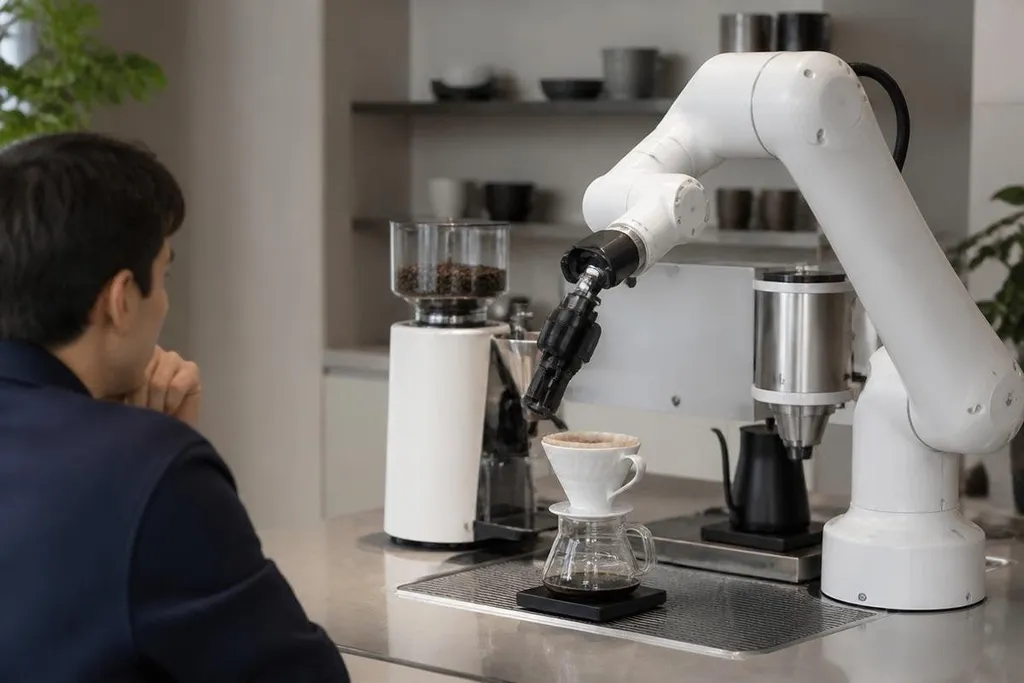
A coffee robot can measure beans, move water, and repeat the same steps with little variation. That may produce the same drink each time, but a repeatable recipe still depends on beans, water, heat, and the person drinking it.
Quick read
- Robots can control dose, grind settings, water volume, and timing.
- Repeatability is easier than judging flavor.
- The machine needs checks for stale beans, blocked parts, and changing water quality.
What the robot can control
Coffee preparation has several steps that suit automation. A robot can weigh a set amount of beans, send them to a grinder, heat water to a chosen setting, and release that water over the grounds at a planned rate.
Those actions matter because small changes can alter the drink. A larger dose makes the coffee stronger. A finer grind slows water movement through the grounds. A longer brew time can pull more material from the coffee, which may change its taste.
The system can also record each step. If the drink changes, an operator can check the dose, grind setting, water volume, and brew time instead of guessing at the cause. That record has value in a café, office, or testing room where the same recipe needs to run through the day.
Repeatable actions do not make the ingredients fixed. Coffee beans can lose freshness after roasting, and different batches can respond differently to the same grind and water settings. Water also carries minerals that affect brewing, so a recipe that works in one place may need changes elsewhere.
Why taste is harder than motion
Sensors can measure weight and time during brewing. Taste needs a judgment about the drink after brewing, and that judgment depends on the person making it and the person drinking it.
A camera might check the color of a coffee. A sensor might measure temperature or flow. Those signals can tell the machine that a process changed, but they don't fully describe aroma, mouthfeel, or whether the result suits a particular customer.
The robot also needs a clear target. “Make good coffee” gives a control system too little to work with. A useful recipe must state the dose, grind range, water amount, temperature, brew time, and the flavor result that counts as acceptable.
That target can still move.
A café may use a different bean after a supplier change. An office may want a stronger drink in the morning and a lighter one later. A home user may prefer a recipe that a trained barista would reject. The machine can repeat a choice, but it can't decide that choice for everyone.
That leaves a clear test for a coffee robot: can it repeat a recipe while recording the choices that shape the drink? A Robot24 report can put the dose, water temperature, grind setting, and human input beside the machine's claim of consistency.
Where the system can fail
A coffee robot has physical problems to handle. Grounds can stick to a chute. A grinder can wear or clog. Water lines can collect residue. A cup can move out of position, or a sensor can read a dirty surface incorrectly.
These faults matter because a recipe can remain unchanged while the result shifts. If the grinder sends an uneven mix of particles, the robot may report the correct dose even though the water meets the grounds differently. Software cannot correct a blocked path that nobody checks.
Cleaning also becomes part of the recipe. Old grounds and oils can affect later drinks, while a dirty water path can change flow. The machine needs a clear cleaning schedule, access to the parts that collect residue, and a way to stop when a check fails.
I’d trust a coffee robot to repeat a well-tested recipe, but I wouldn’t call the result perfect without a person checking the drink and the machine.
A practical buying and setup check
Before choosing a coffee robot, check these points:
- Recipe control: Confirm that you can set dose, grind, water, temperature, and brew time.
- Ingredient changes: Ask how the machine handles a new bean batch or a different grind.
- Sensor checks: Find out which faults it can detect and what happens when one appears.
- Cleaning work: Check which parts need daily cleaning and how long that work takes.
- Human review: Set a tasting check for changes the sensors cannot judge.
That last point decides the promise. A machine can make each cup by the same instructions, while the coffee itself and the person drinking it keep changing. The useful goal is a repeatable recipe with clear checks, not a claim that one setting will suit every cup.